You’re meant to thrive, not survive. Here are 10 signs that you’re survival mode and 5 tips on how to break free.
When was the last time you felt truly at peace?
Do you remember how it felt? What was happening in your life?
If you can’t remember or it’s been a while since you’ve felt that kind of peace, chances are, you’ve been living in survival mode. And you’ve been doing it for so long that it feels normal.
You’ve tricked yourself into believing that this is just how life is supposed to feel: rushed, stressful, overwhelming, and just getting by.
But the reality: survival mode is not your default setting. It’s a coping mechanism.
And it’s not meant to be your way of life forever.
What Is Survival Mode
Survival mode is our brain and body’s way to protect us from threat, harm and instability. It’s the state where your nervous system is on high alert.
It’s a human natural response and it’s not a bad thing.
But when you are on constant high alert, feeling the need to “survive” 24/7, that’s when things get out of hand.
In this mode, you’re no longer making decisions from a grounded place, rather, you’re reacting out of fear, urgency, or exhaustion.
You are not thriving — you are struggling to survive.
And the scariest part? Most of us don’t even realize we’re stuck in survival mode.
10 Signs You Are In Survival Mode (and What To Do Instead)
1. You’re always on the chase
You’re basically running on a hamster wheel.
It’s continuous with no signs of ending. It’s tiring. It’s exhausting.
You believe that if you chase hard enough, get what you want, you will finally be ok.
But once you’ve reached your desire, fear kicks in, and the chasing continues. Why? Because you subconsciously believe that if you stop, everything that you’ve worked hard for will disappear.
This constant chase could be people, achievements, money, approval, love, validation, etc.
How to stop chasing:
Recognise abundance is available to all.
Practice self-love and self-compassion, and reconnect with what you genuinely desire.
Do what feels good for you, and not things that will impress others or what they expect of you.
Reflect on the below questions:
“Would I still want this if no one saw me doing it?”
“Does this actually make me happy?”
“Will this matter in 3-5 years?”
2. There’s never enough (Time, Money, Energy, Love, etc)
You chase because feel like there isn’t enough — money, love, energy, time, etc.
You operate from a place of lack, fear and scarcity.
You hoard your time, overwork to make more money, or panic when things don’t go as planned.
You always feel like you’re falling short or behind.
How to create more abundance:
Practice shifting into an abundance mindset, and intentionally remind yourself: “There is more where that came from” or “There is enough for everyone.”
Count your blessings, and practice gratitude.
Give and share without fear; rest without guilt.
Write a gratitude list.
3. You’re constantly people-pleasing
You say “yes” when you mean “no.”
You avoid conflict, you shape-shift to be liked and accepted.
The idea of expressing your need or rejecting others scares you.
You don’t like to disappoint anyone, and subconsciously believe that it’s your job to make others happy.
You tend to sacrifice your peace and happiness for someone else’s comfort, and fear that standing up for yourself will cost you love or connection.
How to stop people pleasing:
Start setting small boundaries.
Be audacious and say no without over-explaining or feeling guilty.
Practice self-love. Be kind and gentle with yourself.
Only do things that feels good to you and align with your values.
Your body is tense, it lives in fight-or-flight mode.
Your mind races with endless thoughts.
Even small decisions feel overwhelming.
You try to rest but guilt creeps in.
You can’t remember the last time you felt truly at peace.
How to de-stress and find peace:
Regulate your nervous system. Do activities like box breathing or grounding practices like meditation.
Journal regularly to process your thoughts and emotions so they’re not stuck in your body and mind.
Use aromatherapy; scents like lavender and sandalwood can help calm and soothe the nervous system.
Spend time in nature.
Move and stretch body regularly to release tension.
Talk to friends and surround yourself with positive people.
Practice self-care and self-love.
Get more sleep.
Actively talk to your mind and body; tell them that you are safe, and everything is ok.
8. You struggle to trust (others or yourself)
You doubt people’s intentions. You don’t trust yourself.
You have subconsciously prepared yourself for pain or disappointment.
You become indecisive — second-guessing everything, and afraid of making the wrong decision, even with smallest things. It becomes stressful and exhausting.
How to gain trust again:
Start small such as trusting someone with a small favor.
Trust yourself on a tiny decision everyday and journal your experience.
Talk to a therapist about your trust issues, and work on any past traumas that might lead to your current experience.
Affirm daily “It is safe to trust”.
Practice self-care and self-compassion.
Gently build your self-esteem by taking one small action each that takes you out of your comfort zone
Let “good enough” be okay. Confidence grows with practice.
9. You lose interest in life
Nothing excites you anymore.
Even your favourite activities, or hobbies…it just feels like another chore that you need to “get it over with.”
You rarely feel joy or sadness. It’s like you’re on autopilot, going through life without really feeling much at all.
You prefer to bed rot, or use distract yourself with your phone, TV or food because it feels much “safer” to do so.
How to be interested in life again:
Gently reconnect with small pleasures: music that moves you, a sunset, laughter. Let small, safe feelings come back.
Talk to friends or a therapist.
Practice self-care and self-love.
Take yourself out on solo dates at least once a week, even if it’s just for 10 minutes.
Spend time with nature.
Watch comedy videos or attend a live improv show.
10. You can’t picture a hopeful future
The future doesn’t excite you.
The idea of planning, dreaming, or feeling excited about it seems impossible or pointless.
When you do think ahead, you end up feeling hopeless, stressed and overwhelmed.
So your main concern becomes “how to get through the day?”
How to be excited about the future:
Set a small goals that feels safe and comfortable to you like waking up 5 minutes earlier, writing one line in your journal or a solo coffee date.
Repeat positive affirmations like “The future is hopeful,” “My future is bright,”
Visualise your future.
Practice self-care and self-love.
Surround yourself with positive people. People who vibe high have contagious energy that can uplift our mood and spirit.
Journal or talk to a therapist.
How To Get Out Of Survival Mode
Getting out of survival mode is possible, but it won’t happen overnight.
The key to success is start small and be consistent with every small shifts you make. Here are small actions you can do everyday to get yourself out of survival mode:
Create space to feel This isn’t always easy but it’s important to allow our emotions to surface when they need to. Have a journal handy with you so you can write freely how you feel. The key here isn’t to judge but to allow yourself to express freely.
Prioritize safety Whether it’s emotional, physical, or financial, look at where in your life can you create more stability, and start from there. That is usually the tipping point for everything else in your life.
Slow down When on survival mode, your mind and body is always in a rush. Rather than autopiloting your way through, be intentional and remind yourself to slow down. Even if your brain says “go faster,” do the opposite, slow down.
Nurture your nervous system Sleep. Eat nourishing meals. Spend time in nature. Take deep breaths. Be gentle with yourself. Practice self-care and self-love.
Reconnect with joy Spend your time and energy with people and activities that brings you peace, joy and fun. Create non-negotiable time in your calendar just these “fun things,” even if it’s just 5-minutes. It may seem unnecessary, but trust me, they matter and will create a big difference in how you feel and show up.
Remember: You’re not lazy, broken, or behind. You’re just exhausted from surviving. And your body, mind, and heart are craving something more sustainable, softer, and most importantly, something that brings sparks and joy back into your life.
Still wondering why you feel stuck in survival mode?
Survival mode is often a symptom, not the root cause.
Sometimes the habits, fears, and reactions keeping us stuck aren’t obvious. They’re buried beneath old beliefs, unresolved emotions, and patterns we’ve carried for years.
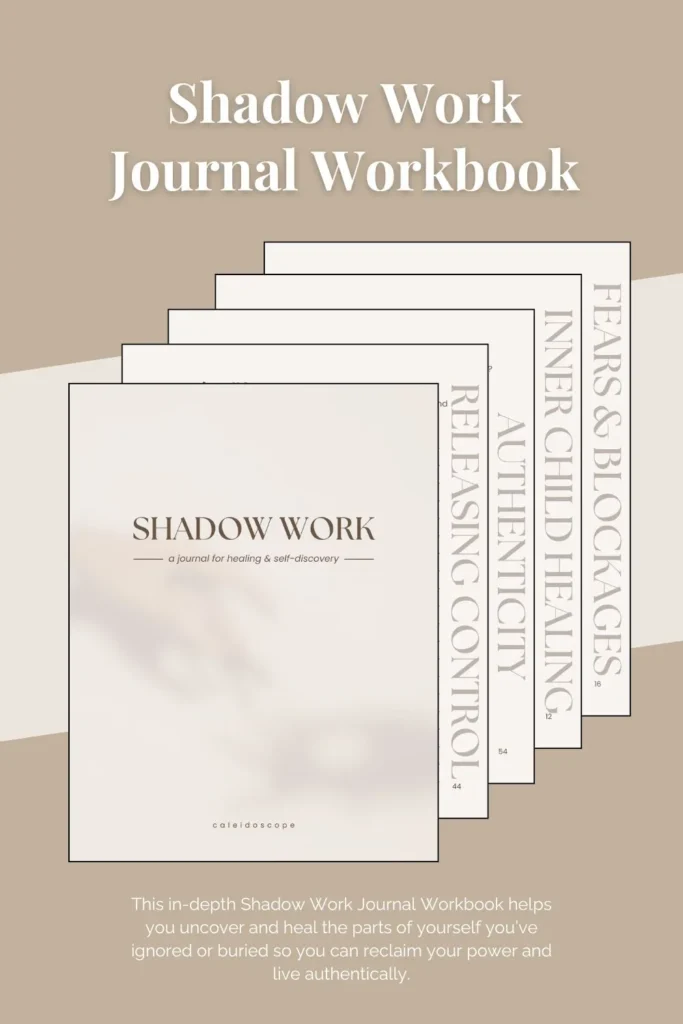
If you’re ready to go deeper, the Shadow Work Journal & Guide can help you explore the hidden parts of yourself through guided prompts for self-discovery, inner child healing, and emotional awareness.















&media=https://thecaleidoscope.co/wp-content/uploads/2025/07/how-to-get-out-survival-mode-780x1024.webp)