Good news! You don’t need to be a writer to journal.
In this article, you will find information on how to start journaling for beginners, what it is and its benefits.

Did you know that expressing your thoughts onto paper is a form of therapy that is practically free of charge?
You don’t need anything fancy, just a pen and a piece of paper.
Or if you prefer digital, then a laptop or the note taking app on your phone will do.
Let’s dive deeper in learning more about journaling, how to make it part of your daily routine, and tips and tricks to maximise its benefits.
What is Journaling?
Journaling is the process of putting your thoughts, emotions, feelings and experiences into writing.
It can help you better understand yourself (increase self-awareness), and work through difficult challenges and emotions like stress and anxiety.
There is no right or wrong way to journal. It’s a personal experience and each person will get a different experience out of it.
For some, journaling is used to unpack their feelings and emotions. For others, it’s used to record their day-to-day lives and celebratory moments.
(This site contains affiliate links. I may earn a small commission, at no extra cost to you.)
5 Benefits Of Journaling
Journaling is a simple and effective exercise that offers many benefits to our mental health and wellbeing.
1. Promotes self-discovery & increase self-awareness
Journaling is a great self-discovery, self-reflection and self-development tool.
The more you write, the more you become self-aware and in tune with your thoughts, feelings, and behaviours. This can ultimately help you identify areas where you may want to make changes, leading to personal growth and improvement.
2. Improves mental health & wellbeing
Writing is a powerful form of self-therapy and stress relief.
It’s a safe and private space where you can express yourself freely without external judgements.
It can help you release any pent-up emotions and gain clarity on what’s really bothering you. This newfound clarity can help you feel more in control of your thoughts and emotions, and ultimately reduce those overwhelming feelings of stress and anxiety.
Feeling stressed and not sure how to release those release those pent up emotions? Click here to learn simple and low-cost ways on how to manage stress and improve your mental wellbeing.

3. Inspires creativity and imagination
When you explore your thoughts and ideas in a non-judgmental way, you can open up new avenues of creativity and discover new insights and perspectives.
This can help you tap into your inner resources and find new solutions to problems or challenges in your life.
Capture your life one day at a time! Start your 5-Year journal memoir today and see how your thoughts, dreams, and memories evolve over time. With just one simple sentence per day, you’ll create a personal time capsule to look back on for years to come. Get your 5-year here.
4. Improves memory and focus
Journaling can have a positive impact on memory and cognitive function.
The act of writing your ideas down can increase remembrance and form creative connections to other thoughts or events. This approach lets you stay sharp and organized, allowing you to recall essential information more accurately.

5. Enhances emotional intelligence
Journaling is an excellent tool to help you identify and better understand your emotions.
By reflecting on your feelings and experiences, you can gain a deeper understanding of how you respond emotionally to different people and situations.
This can lead to improved relationships, communication skills, and a more effective approach to handling challenging situations.
Tired of boring dates? Check out our creative A-Z alphabet dating ideas that will help bring back spark and excitement back into your love life!
How to Start Journaling

The simple answer: write.
Grab a pen and a piece of paper, and start writing.
Express yourself freely.
Write down your thoughts, your concerns, and your emotions. Write what brings you joy and makes you laugh. Write about your day, and pen down your dreams and aspirations.
Most importantly, whatever you write, let it be an honest reflection of your heart and mind.
Journaling is a journey of self-expression and exploration, and the experience is unique to each individual.
There is no right or wrong approach.
It’s not a judgment exercise but a tool to help you understanding yourself on a deeper level.
Ever wondered why some people are always happy? The answer lies in their habits. Click here to learn the positive habits to cultivate so you can live a happier and more content life.
7 Journaling Tips for Beginners
Here are the steps I used to make journaling a regular practice.
My preference is to journal in the evening so I could stay grounded and clear my thoughts before bed (my sleep quality dramatically improves).
The order of importance for these tips are the same, and they will vary depending on your personal need, lifestyle and routine.
However, I do suggest that you start with the first tip: “why do you want to start journaling?”.
As with anything in life, knowing your why is the key driving factor and determinant of your success.
Is your chatty mind keeping you up all night? Learn how to effectively reduce your overthinking before bed for a good night sleep.
1. Ask yourself: Why do you want to start journaling?
With anything you do in life, it’s important to know why you do what you do.
This plays a key factor to your commitment, discipline and the outcome.
So why do you want to start journaling? What is the motivation or intention behind the need to write a journal?
Whatever your reason may be, let that be your guide and motivation.
2. Schedule a time to journal
The best way to start journaling is to schedule it in your diary.
Consider journaling in the morning, before you sleep or in between breaks, see what works best for you. The key here is to schedule a non-negotiable time to journal.
How long should you journal?
Honestly, it depends on how much you want to write. Some days you might want to write an essay, on other days, it might only be a line or two. Again there is no right or wrong way to journal.
Do you struggle to wake up each morning? Chances are you haven’t found an effective morning routine that aligns with your lifestyle, goals and vision. Click here to learn how to create a morning routine that not only sticks but sets you up for success.
3. Find a safe and comfortable place to write
Journaling is a personal experience, so it’s important to write in an environment that feels safe and comfortable.
Ideally it should be quiet place with minimal distraction where you can freely express yourself.
Did you know that messiness can impact our mental health? Check out our room-by-room cleaning checklist to ensure that your space is clean, clear of clutter and organised for maximum serenity and a peace of mind.
4. Pick a journal you love
There is nothing worse than writing in a journal that doesn’t inspire or motivate you. So it’s important to find a notebook that you absolutely love to use.
Pick a journal that you feel strongly connected to and it reflects your personal style. This also applies if you’re opting to use an app or laptop to record your entries.
Also note that your writing tool (pen, pencil, crayon, etc) is just as important. While all this might seem unnecessary but trust me, it will make a big difference to your journaling process.
Check out this notebook! A writer’s favourite — this lined notebook is highly raved for it’s design, premium quality and affordable price.

5. Start with small journal entries
It’s absolutely normal to not know what to write when you first start. So don’t fret or give yourself too much pressure.
Write what comes to your mind at that moment. If your mind goes blank, write about your day or a recent experience.
Your entries don’t have to be long, a few lines will do.
As you write, thoughts and ideas will flow to you naturally. And with practice you will find yourself writing longer entries, and various topics.
Remember, there is no right way to journal. If you feel like adding colors or photos to your journal — do it!
Try different journal styles and explore a variety of mediums; don’t be afraid to mix and match things up.
6. Use journaling tools for inspiration
If you need inspiration on what to write, consider using journal templates or journal prompts to help you. They are journal tools that provide structure and guidance, and add variety to your journaling practice.
- Journal prompts are questions, suggestions or statements that inspire you to think and write (see below example). The topic can be general or specific. The prompts can be challenging at times because it pushes you to think outside of the box. They are a great self-development and self-discovery tool.
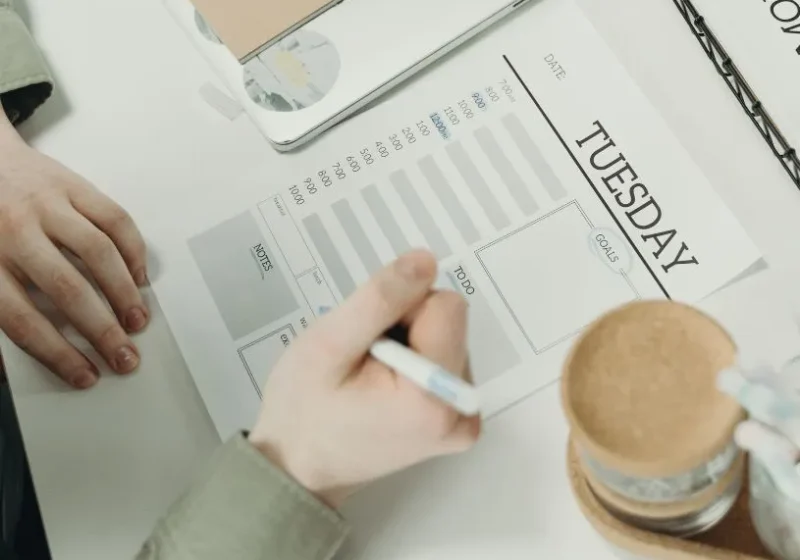
- Journal templates are pre-designed layouts to guide you through your journaling process. They come in handy, especially at the start of your journaling journey. A typical template will have questions and prompts, a to-do task list, and a section to reflect on your thoughts, feelings and experiences. These templates are available in both print and digital.
These journal tools are free for download on Pinterest or Canva and can be purchased on Etsy.
Want to have something to write everyday of the year? Check out our 365 journal prompts with a different theme each month.
7. Let go & release judgment (write freely)
Journaling is a solo, self-discovery process.
You write not for anyone but for yourself.
So write what’s in your heart and in your mind.
Let go of any judgements and your worries about structure, grammar, and misspelled words — they don’t matter when it comes to journaling.
What’s most important is your honesty with yourself: be open and don’t hold back.
You get the most benefit out of journaling when you freely and authentically express yourself.
Final Thoughts
Journaling is a fun, unique and personal experience.
You don’t need to be a writer to journal. You just need to be honest with yourself when you write.
Every thought and experience is a stepping stone toward self-discovery and personal growth. Plus, it’s always something fun to look back on.
Happy journaling!:)