This post gives you 25 flop era journal prompts to help you sit with the failures, extract the lessons (yes, there are some), and walk out of your flop era feeling wiser, and more confident.
Welcome to your FLOP ERA.
An important milestone to reflect and celebrate all things that didn’t work out…your failures, those cringy moments, the plan that fell through… it’s time to give them more love than the wins ever did.
It’s time to stop pretending and to embrace that honest, human side of you, “hey, things didn’t work out and that’s ok”.
The flop era is not the end of your story. It’s the plot.
There are many ways to process this. You can talk about, meditate on it, create a video and share on social media or write it out. Let’s focus on the latter, let’s journal about your flop era.
What Is A Flop Era
A flop era is basically moments in our life where things didn’t workout as planned.
You try, you launch, you hope — and the results are underwhelming, embarrassing, or completely nonexistent.
AKA, you failed.
It can be a season (a few bad months) or a whole chapter (a year that humbled you). It can show up at work, in love, in your creative life, in your body, in your bank account.
What a flop era is not:
– A life sentence – Proof you’re untalented, unlovable, or behind – Something to be ashamed of
A flop era is going to look different for everyone because the idea of failure means different from person to person.
It’s important to remember that every single person you admire, every person that has ever been successful has gone through their own version of a flop era. Most have several, and many are silent about it.
Why your flop era isn’t wasted time
As cliché as this might sound, wasted time don’t exists, and neither does your flop era.
It may appear as so because things didn’t turn out the way you hoped BUT most if not all the key ingredients to success are actually born from your most floppiest moments.
A flop era teaches you what you’ll never tolerate again, how to make an effective cold call, how to story tell without the stutters and filler words or close a deal in less than 20min.
Every one of those awkward, messy moments are polishing your skills to become the best version of you.
That’s also where self-trust gets built, not by succeeding, but by surviving the worst-case scenario and realizing everything is going to be ok (and it is).
And if none of that convinces you, consider this: every comeback story requires a flop era. This is yours. And it’s only the beginning.
25 Journal Prompts For Your Flop Era
I’ve split these flop journal prompt questions into three phases: the flop itself, what it taught you, and the way out (because there is always a way out).
Phase 1: Name the flop
There’s no flip without a flop. There’s no success without failure. Here you will write about the failure itself, and everything related to it.
1. Describe your flop era like it’s a movie trailer. Be dramatic. Be a little funny. What’s the title? 2. What’s the thing that was supposed to happen? Write the fantasy version in full detail. 3. What actually happened? Write the real version right next to it. (This gap is where the pain lives — look at it.) 4. What’s the story you keep telling yourself about this flop? Whose voice is it really? 5. What are you most embarrassed about? Say it plainly. Write it bold. 6. Name the emotion that is underneath the embarrassment. Is there a root cause to this emotion? 7. Write a letter you wish you could send someone explaining what happened. Then close your journal. You don’t have to explain yourself or send that letter to anyone. 8. What does your flop era feel like in your body? Where does it sit? How heavy is it today, 1–10?
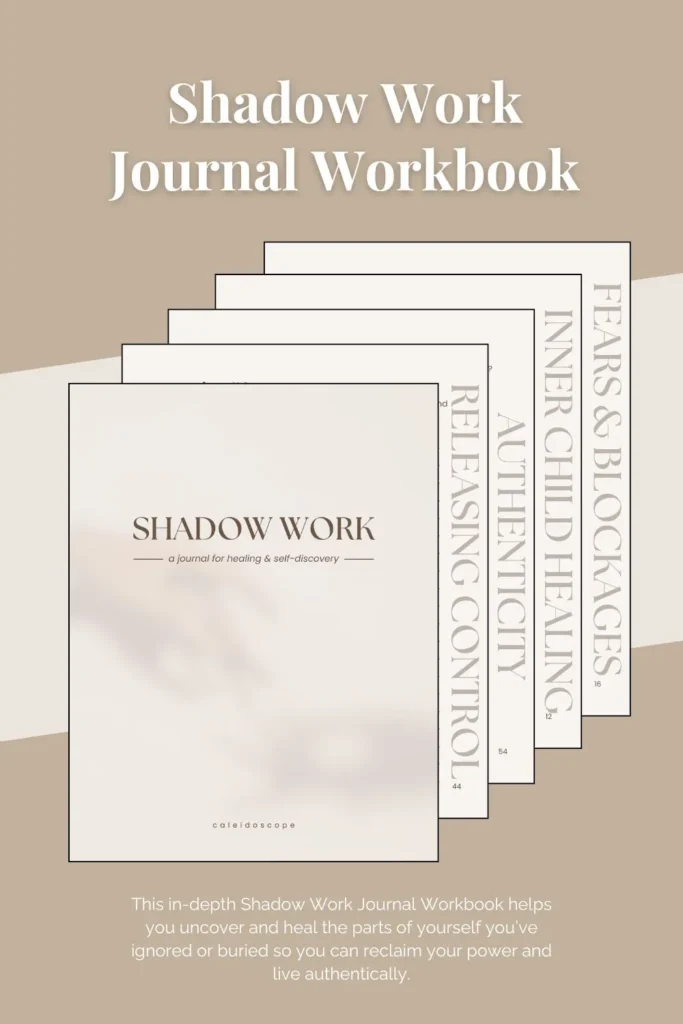
Healing isn’t about erasing your past but understanding it. If you’re ready to dive deeper into learning more about yourself and root cause to your fears and triggers, download the Shadow Work Journal & Guide. It features printable prompts designed to guide you safely through inner child healing at your own pace.
There are lessons hidden in our choices and actions. Look closely, think deeply. The lessons you discover could be key to your next success.
9. What did this flop teach you about what you actually want? 10. What red flag(s) did you ignore that you’ll never ignore again? 11. What did you learn about your limits, your capacity, and your non-negotiables? 12. How did you cope, and what would you do differently next time? 13. Who showed up for you in your flop era? Who disappeared? Write down both lists. 14. What skill, strength, or piece of self-knowledge do you have now that pre-flop you didn’t? 15. If this failure was protecting you from something worse, what might it have been? 16. Finish this sentence: “Because of this era, I will never again ______.” And this one: “…and I will always ______.”
Phase 3: The comeback
This is the planning phase. Combine what had happened and what you learned to create a new game plan for your return.
17. What evidence do you have that you’ve survived hard things before? List them all out. This is to remind you that you’ve done this before and you’ll do it again. 18. What would your next era be called, and what’s one tiny thing that belongs to it? 19. What’s the smallest possible next step you can take post your flop era? 20. What do you want to be known for when you look back 5 years from now? 21. Write a letter from your future self, one year from now, about this era. What will they thank you for? 22. What permission are you waiting for to start again? Write it out and sign it yourself as self-approval. 23. What would trying again look like if it didn’t have to be impressive or looked a certain way? 24. What part of the flop gets to come with you into the next era? (ie. The lesson. The humor. The hunger. Pick your souvenir.) 25. Create a draft outline of actions you will take for the next 3-months as part of your comeback plan.
How to journal your failure without spiraling
A few ground rules, because flop-era journaling should help, not hurt:
Set a timer. 15–20 minutes is plenty. Dump your feelings but don’t drown in them.
End on the fix. Finish every session with one kind sentence or one tiny next step. Never close your journal on the spiral.
It’s not set in stone. Your flop era feelings are real, but they’re a weather report, not a prophecy. They can’t predict the future.
Skip the days you need to skip. Journaling is a tool, not homework. If you don’t feel like writing, take a break, go for a nap, call a friend. Every rest you take is just as important as the words you write.
Flopcore Is The Celebration We Need
Your flops will make you wise.
One day this era is going to make a great story. The kind you tell with the confidence of someone who made it out.
The plot twist is coming, in fact it’s happening right now. You just have to write through the middle chapters, even the messy ones.
Especially the messy ones.
FAQ On Flop Era
1. What does “flop era” mean?
A flop era is a period of life where your efforts don’t work out as planned. Many might see it as “the end” but it’s actually a normal, universal phase of life, and the internet’s “flop-core” trend has made it something people share openly instead of hiding.
2. What is flop-core?
Flop-core is a social media trend where people post their failures, cringe moments, and unsuccessful eras instead of polished wins. These sharings can be honest, funny, sad and deeply relatable.
3. How do you get out of a flop era?
Start small.
Name what happened honestly, extract what it taught you, and take one tiny next step rather than attempting a total life overhaul.
The reason why journaling helps it’s because it moves the flop out of your head and into a story you can actually work with.
4. Is it normal to feel like a failure in your 20s and 30s?
It’s normal to feel like a failure at any age.
Most “overnight successes” spent years in flop eras nobody saw. A bad chapter is not a bad life, and feeling behind is one of the most common shared experiences of adulthood.
5. Can journaling help with failure?
Yes. Writing about setbacks helps you process the emotions, spot patterns, and separate what actually happened from the harsh story you’re telling yourself about it. It turns rumination into reflection.